
Dade County Bench Warrants Explained
Miss a court date in Dade County and a bench warrant can follow. Georgia's Uniform Misdemeanor Citation rules let a judge order that a defendant be brought in after a failure to appear without sufficient excuse. Notice beforehand is possible under those rules, yet nothing guarantees advance warning in any given Dade County case. So begin with the missed duty itself. Write down the date, the court, the case or citation number, and any proof that explains what happened. Then call the issuing court and ask three things: whether a warrant issued, whether it is still active, and what the court will accept as your next step.
Dade County Missed-Date Checklist
Move fast, but do not guess. In Dade County, paying online may not count as an appearance, and an old calendar entry cannot tell you the current status of a warrant.
- Read the citation or notice and identify the exact Dade County court.
- Write down the case or citation number and missed date.
- Call the court and ask whether a bench warrant was issued.
- Ask about recall, a new setting, proof, payment, bond, or counsel-arranged surrender.
- Call the Sheriff before any in-person inquiry when custody is possible.
Log the office you contacted in Dade County, the date, and the instruction given. Ask for written confirmation or a docket record when the court offers one.
How Dade County Bench Warrants Are Issued
A judge in Dade County issues a bench warrant after a missed court obligation once the required procedure is met. That could be a traffic date, an arraignment, a criminal calendar call, a county ordinance setting, or some other required appearance. The issuing court and the underlying facts control, and no universal waiting period or automatic notice promise applies here. A Dade Clerk calendar page publishes criminal calendar headings with dated material, which can help you find a hearing category. It is not proof of a warrant, though, only a starting point before you call the court.
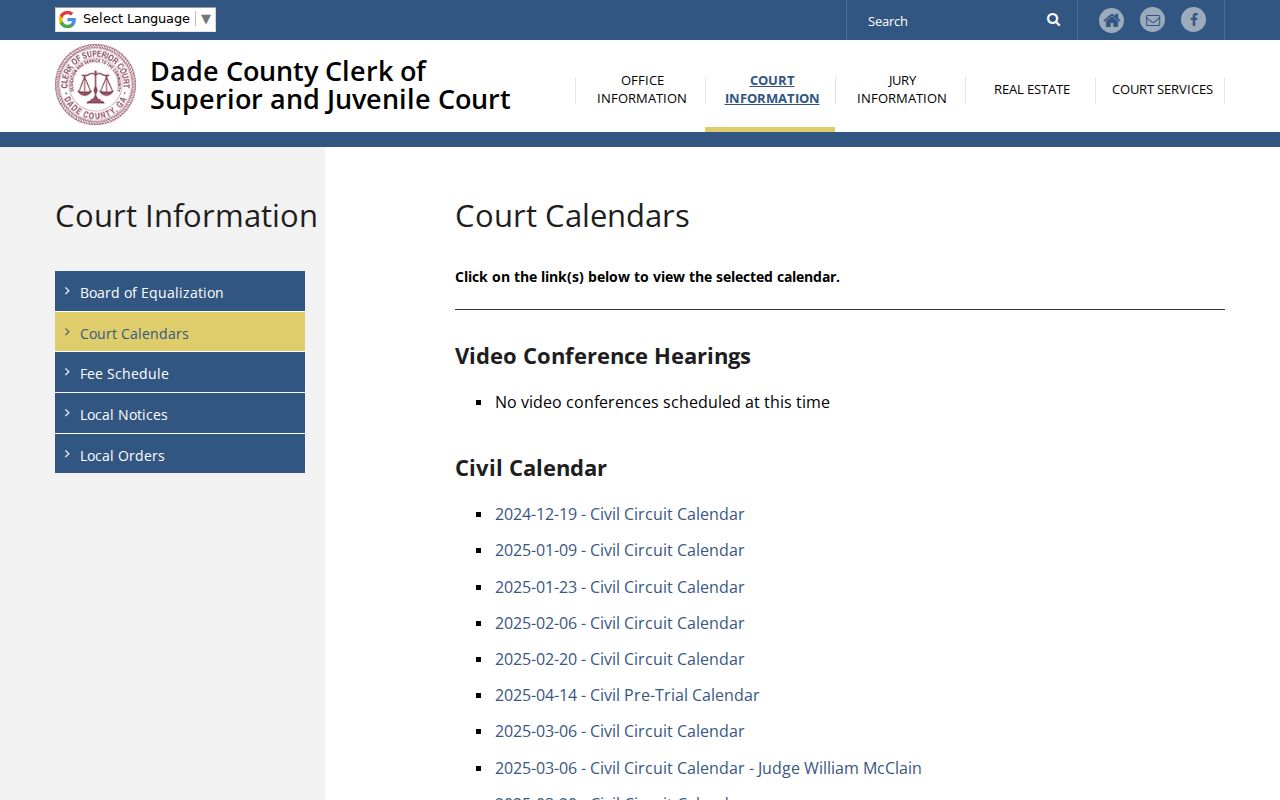
That official calendar route covers hearings only. Dade County publishes no bench-warrant roster, recall field, or live service status through it.
Dade County Calendar Evidence Limits
A felony calendar call, an arraignment listing, or a misdemeanor schedule proves one thing: that a hearing of that type was set for that date. It cannot tell you a bench warrant exists, and it cannot show that a later court order recalled the warrant. Treat the calendar as a way to frame a precise question, then take that question to the Dade County court. Ask for the docket event tied to the missed setting, any entry showing warrant issuance, and every later return or recall entry. When a record is not online, the Superior Clerk lets the public search from an onsite terminal with minimal help, though staff will not run broad history searches for you. Specific dispositions can still be requested through the clerk.
Bench Warrants and Arrest Warrants Compared
Both are judicial process, but they are triggered by different events in Dade County. That difference tells you which facts and records matter most.
| Point | Bench Warrant | Arrest Warrant |
|---|---|---|
| Typical trigger | Missed appearance or noncompliance | Probable-cause finding tied to an alleged offense |
| Main record | Docket, notice, setting, or compliance event | Warrant and permissible application material |
| Issuer | Judge controlling the pending matter | Neutral judicial officer |
| Resolution question | Reset, recall, proof, payment, bond, or surrender | Bond, appearance, surrender, or later disposition |
Current warrant status must come from the responsible Sheriff and the issuing court in Dade County.
Dade County Probate Traffic Route
Dade County runs no separate State Court, so Probate Court picks up some traffic and misdemeanor matters. A county citation does not land in Trenton Municipal Court or Superior Court by default. The citation itself, and the court named on it, control the route. The official Probate Court page describes the court's court-of-record status and its traffic docket.
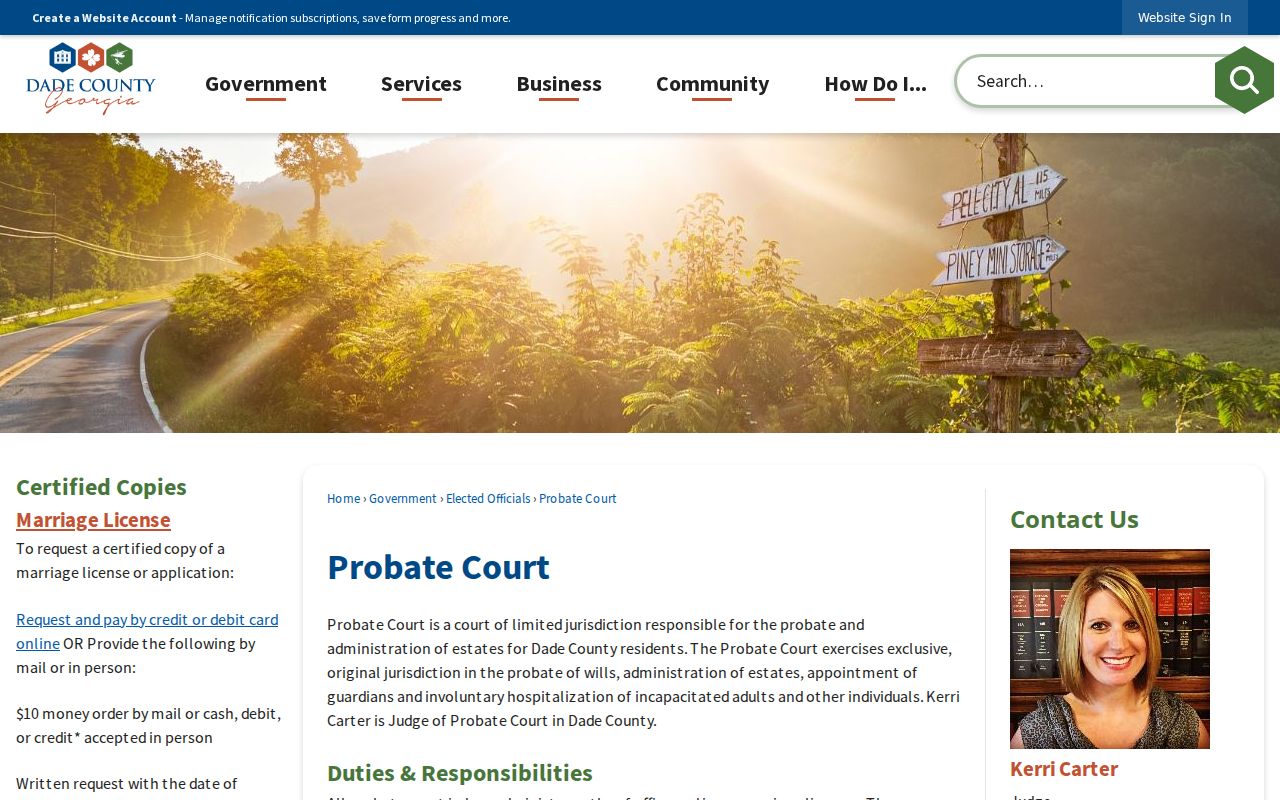
The Dade County Probate Court sits at 255 West Crabtree Street, reachable at 706-657-4414. Call and ask whether the citation belongs there, whether a bench warrant followed a missed date, and what steps the court allows now.
Resolving a Dade County Bench Warrant
No single Dade County transaction clears a bench warrant. Depending on the case, the court may want a recall request, a hearing, proof of earlier compliance, payment, bond, surrender, or an attorney appearance. A recall means the court withdraws the process. To quash it is to end it by court action, and only the issuing court can confirm either result.
Call before appearing: Ask about custody risk, available court dates, bond, and whether counsel can arrange a safe surrender or court appearance.
Paying does not itself prove a recall. Georgia.gov notes that paying a ticket before court generally counts as a guilty plea, and some matters still require an appearance. Trenton's ticket FAQ tells anyone with a past date to contact the clerk. Get the court's confirmation after any directed step, and see the Dade County warrant records overview for more resolution context.
Dade County Forms Do Not Promise Recall
The Dade Clerk's public forms inventory includes no standard warrant-recall or self-surrender form. That absence is not permission to grab a generic form from elsewhere. Ask the issuing court what filing, motion, proof, or appearance it wants in your specific case. The official Dade Clerk forms page shows the current inventory.
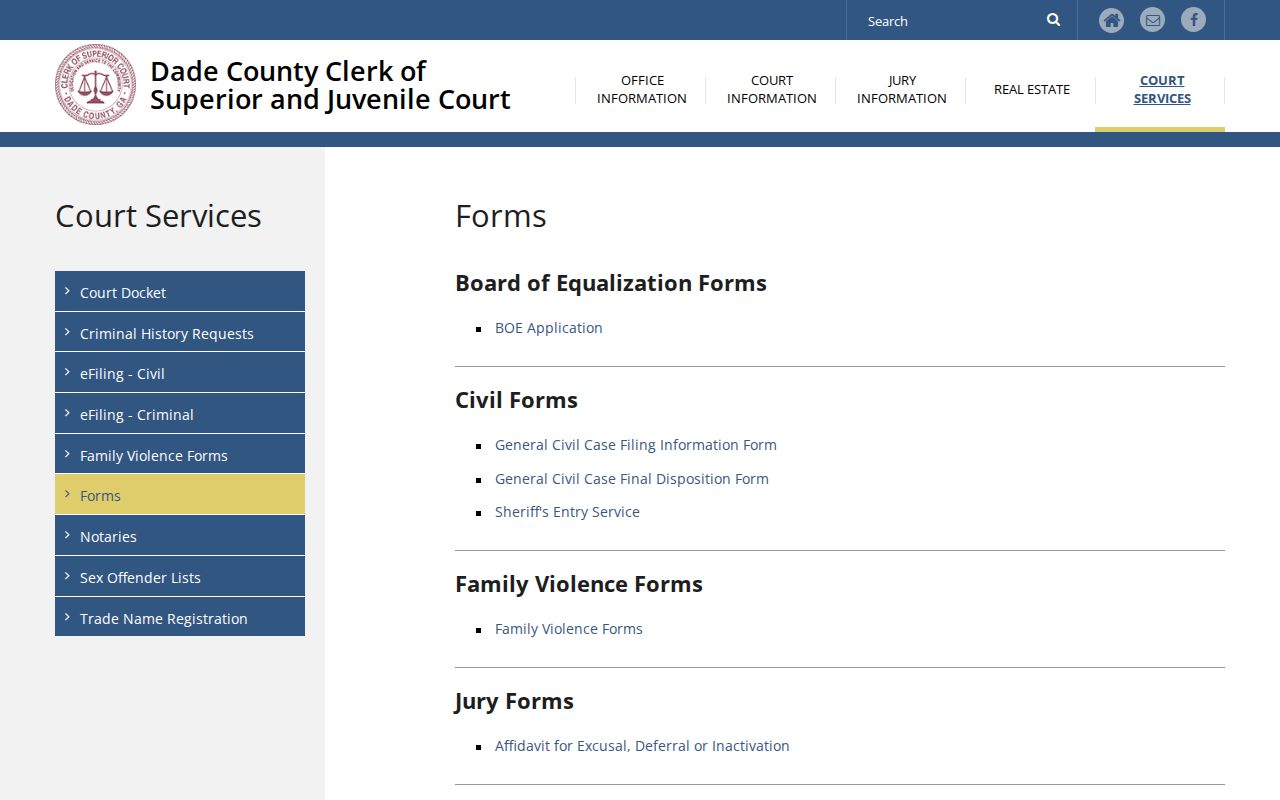
Check current local forms for Dade County rather than assuming one document fits every court. Magistrate, Probate, Municipal, and Superior matters can each demand a different filing or appearance.
Finding the Court That Issued the Warrant
Dade Magistrate Court takes first appearances, preliminary hearings, many bonds, and county ordinance matters at 706-657-4113. Superior Court handles felony cases through Clerk Kathy Page at 706-657-4778. Probate Court covers qualifying county traffic and misdemeanor matters at 706-657-4414. Trenton Municipal Court, through City Hall at 706-657-4167, handles city traffic and ordinance cases. Juvenile matters route under restricted rules.
| County ordinance or early hearing | Dade Magistrate Court |
|---|---|
| Felony calendar or docket | Superior Court and Clerk |
| County traffic or qualifying misdemeanor | Dade Probate Court |
| City traffic or ordinance | Trenton Municipal Court |
| Service or custody | Dade Sheriff, 706-657-3233 |
If unsure, read the top of the citation or notice, because the word traffic alone does not tell you the Dade County court.
Dade County First-Appearance Timing
Timing matters after an arrest in Dade County. Georgia's Uniform Magistrate Court Rules require a first appearance without unnecessary delay, and no later than 48 hours after a warrantless arrest or 72 hours after an arrest on a warrant, unless bond has already been made. That hearing covers the charges, rights, counsel, commitment, and bail. It is not the trial. Dade Magistrate Court says it conducts first appearances and sets bond in most cases, unless another judge has kept bail authority. No fixed bond amount applies across the board. Ask which court controls bond and what conditions attach. One more caution: a Clerk fee schedule line for criminal bond taking is a fee, not the bond amount itself.
Dade County Bench Warrant Records
A focused Dade County records request can target the docket event, notice, warrant entry, return, recall, or disposition for a stated period. Add the case or citation number if you have it. General county requests and Sheriff requests go through separate email routes. The Georgia Open Records Act allows exemptions and redaction, and juvenile records carry strict confidentiality limits.
- FTA
- Failure to appear or respond.
- Recall
- The issuing court withdraws process.
- Quash
- A court ends the warrant through judicial action.
- Bond
- A court-approved release mechanism with case-specific terms.
- Return
- A record of service or arrest sent back through the process.
Match the exact wording used on the Dade County record. Local dockets carry no Texas-style capias label. Keep whatever follows: the order, the receipt, a new hearing notice, or the disposition. A receipt proves payment, not necessarily recall, while a later court entry shows what the judge actually ordered.