
Dade County Active Warrants Explained
An active warrant is simply judicial process that no court has yet recalled, satisfied, canceled, or closed. The label is shorthand. It cannot replace current confirmation. A warrant may have been served while the return never reached a public docket, or a judge may have recalled it while some other system still shows the older entry. That is why status matters more than the word. Dade County publishes no sheriff's active-warrant database for the public. Instead, call the Sheriff at 706-657-3233 and ask which unit confirms the current state of a warrant. Ask whether staff will answer by phone, what identification is required, and which court issued the process. Georgia cautions that walking in to ask can end in custody if a warrant does exist, so weigh that before going anywhere in person.
No Dade County Active Roster
No public roster exists for Dade County, and that gap matters. Do not fill it with names pulled from news stories, social media, or commercial databases. Those listings may be stale, partial, or missing the court event that changed a warrant's status. The official Sheriff site documents service work, not a public warrant list. For court records, the official Superior Clerk page is the county's felony-record route.
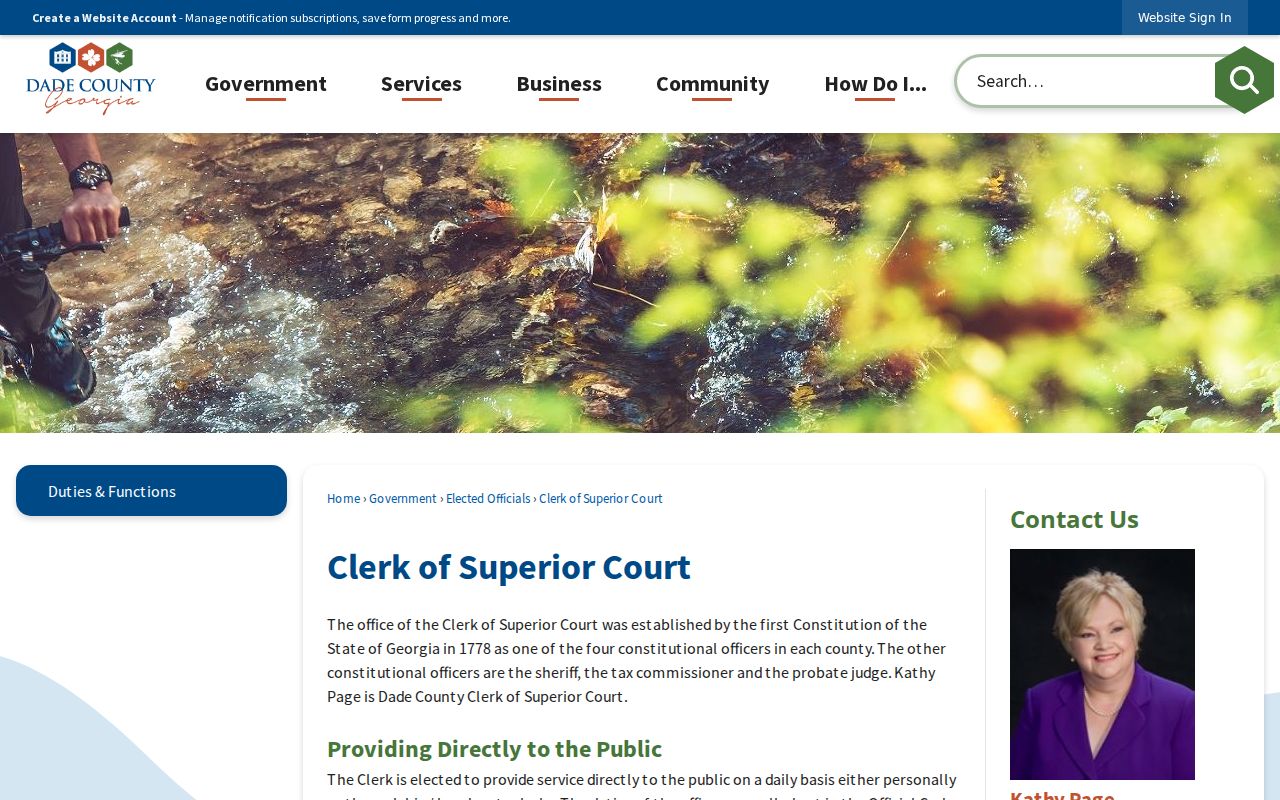
Clerk Kathy Page runs Superior and juvenile court administration at 255 West Crabtree Street, Suite 103, reachable at 706-657-4778. Her record route is separate from Sheriff service confirmation, so use each office for what it actually controls.
How Dade County Tracks Active Warrants
Warrant work in Dade County is split by court. The Dade Sheriff's Court Services unit serves warrants and civil papers, while the issuing judge or court controls recall. Magistrate Court considers arrest and search warrants, holds first appearances and preliminary hearings, handles county ordinance matters, and sets many bonds. Superior Court controls felony cases. Probate handles certain traffic and misdemeanor matters, because Dade County has no State Court. Trenton Municipal Court takes city traffic and ordinance cases. This division means one office may know service or custody status while another holds the controlling case event, so confirm both when it matters. Note the warrant or case number, the issuing court, the last event date, and the name of the office you contacted. That record keeps later follow-up precise.
Dade County Dockets Are Not Lists
The Dade County Clerk links docket, calendar, criminal-history, and forms resources. None of them is a public active-warrant roster. A docket can show a case event. A calendar can show an arraignment or a calendar call. Neither guarantees that a warrant is still active or has been recalled. The Clerk Court Services page is the official starting point for these court records.
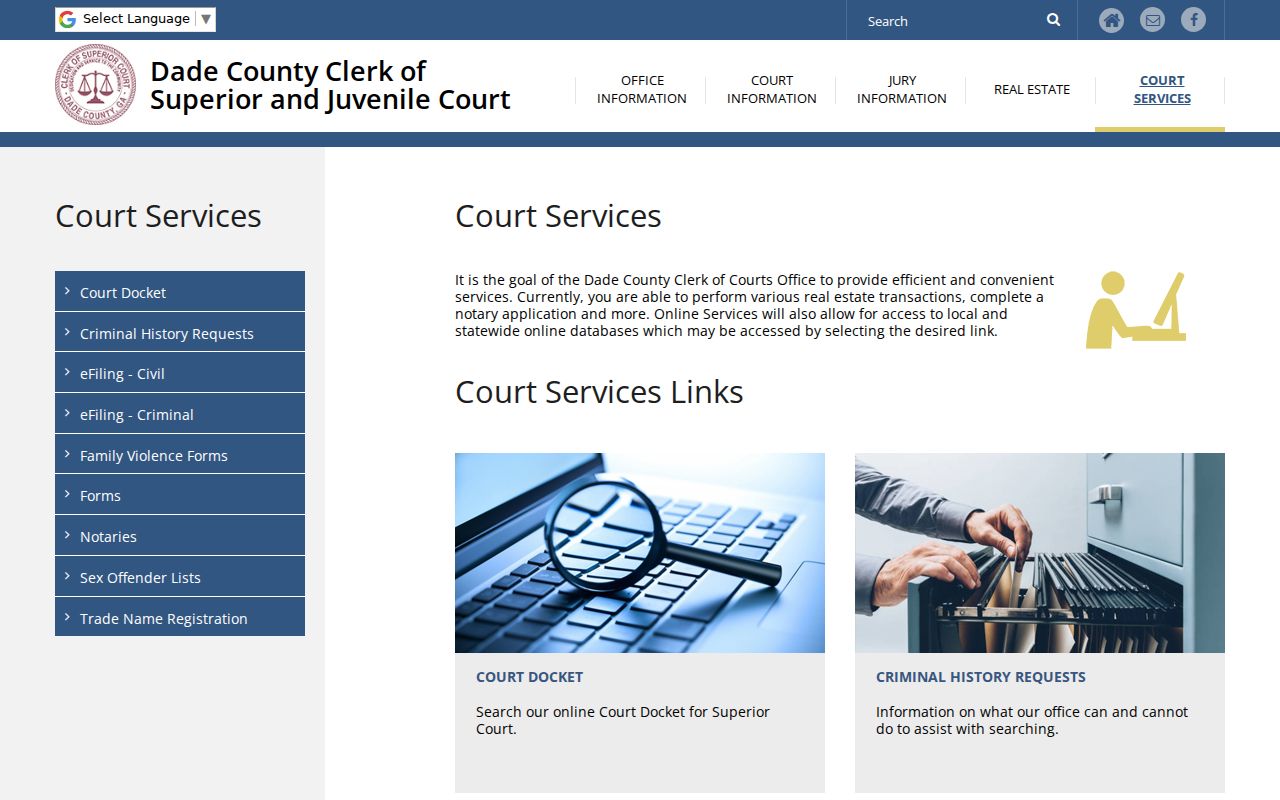
Search by case number to pull related Dade County entries. Then ask the issuing court which entry settles the warrant's current state. A search miss can reflect indexing, access limits, or jurisdiction rather than the absence of process.
Inside an Active Warrant Record
Records vary by Dade County court. Some material is sealed, redacted, or simply absent from public systems. Start with the court and the latest status event.
| Issuing court | The court that authorized process and controls disposition |
|---|---|
| Identifier | Case, citation, or warrant number |
| Process | Arrest warrant, bench warrant, or another exact court term |
| Issue and return | Dated events showing issuance, service, arrest, or return |
| Current event | Recall, satisfaction, bond, next setting, or disposition when available |
Bond terms change too, so check them with the Dade County court that controls the bond.
Dade County Clerk Terminal Limits
The Dade County Clerk states that staff do not run general misdemeanor or felony file searches for the public. Onsite public terminals are open with minimal assistance, and a requester may ask for a specific disposition. That access helps someone trace a Superior Court record of their own. It is not the same as live Sheriff confirmation of a warrant. The criminal-history request page documents this boundary.
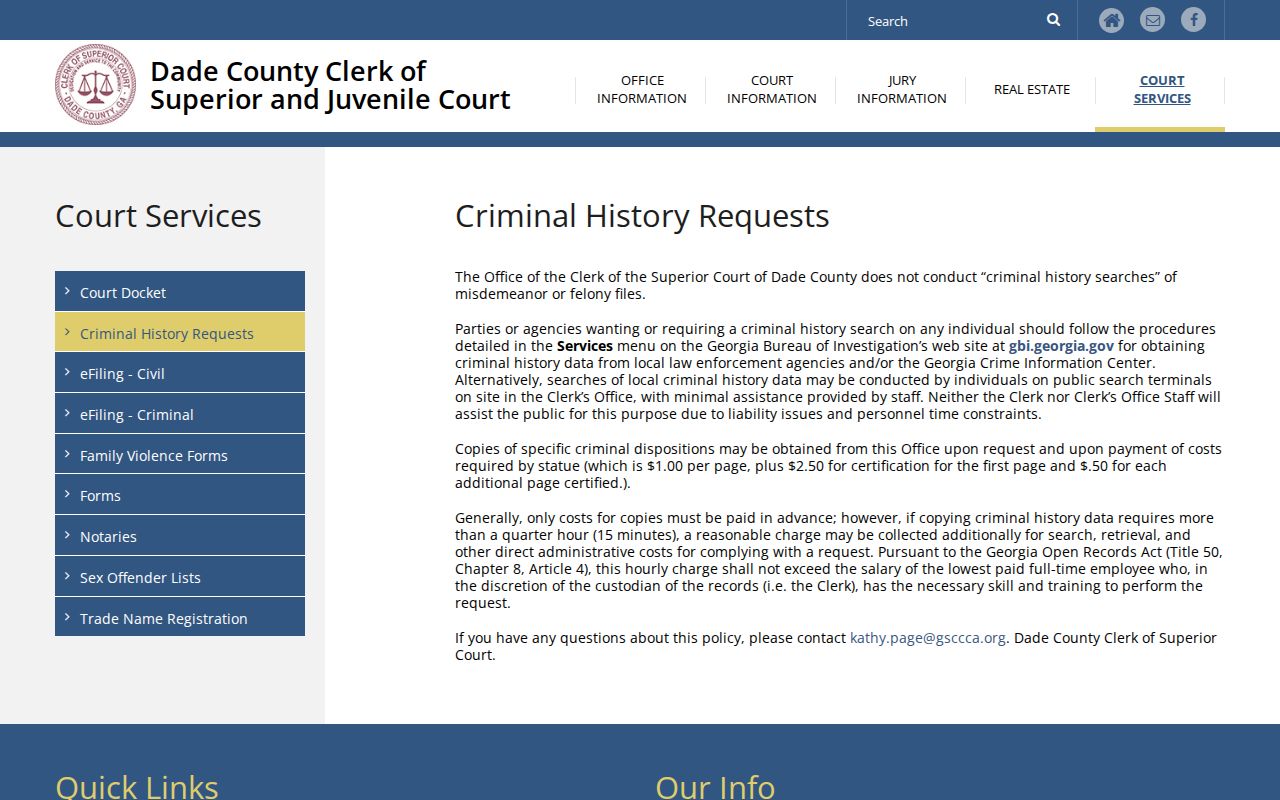
A criminal history, a certified disposition, a docket entry, a custody check, and active-warrant confirmation are different products in Dade County. Ask for the one that answers your actual question.
Warrant Roundups and Most-Wanted Lists
Dade County runs no official warrant roundup, amnesty program, active-warrant roster, or most-wanted roster. Do not infer one from old news or stitch a list together from separate sources. If a program ever appears, verify its dates, eligible cases, exclusions, payment rules, and official contact before acting.
Publication rule: An official list should be described and linked, never copied into a private roster of names, photos, or allegations.
No most-wanted page does not mean no warrants. Dade County stays a direct-confirmation jurisdiction. A curated public-safety notice differs from all Dade County most-wanted information, because even a future list would show only a chosen subset.
Verify Dade County Warrant Messages
The Dade County Clerk has warned of a jury-duty text scam built on threats and payment demands. A text, call, or email is not a court order. Never use a number supplied inside a threatening message. Look up the published Sheriff or court number yourself, say the inquiry concerns your own case, and ask whether the office sent the notice. The official Clerk site carries the local warning.
Never pay a Dade County warrant demand by gift card or through a link from an unverified caller. Use only a payment channel the issuing court itself confirms.
When Your Name Is on the Warrant List
A confirmed warrant in Dade County needs a plan, not panic. Do not assume an online payment, DDS action, or an old case closure cleared it. Ask the issuing court directly whether it wants a hearing, a recall request, proof of compliance, bond, surrender, or counsel appearance. That is the judge's call. The Sheriff can explain service or custody routing, but no deputy can replace a court order.
Act safely: Call before appearing in person, preserve the case number and instructions, and consider counsel when custody or surrender is possible.
Match the office to the case. For a traffic FTA in Dade County, fix the court matter, then separately verify any DDS suspension. Felony cases go to the Superior Clerk. City tickets go to Trenton Municipal Court. The citation and issuing jurisdiction decide which door to knock on.
Dade County Open Records Route
An Open Records request can work, if you keep it narrow. Ask for a specific warrant entry, return, docket event, notice, or disposition. General Dade County requests go to info@dadecounty-ga.gov; Sheriff requests go to Info@dadesheriff.com. State the date range, the agency, any known number, and the format you want. If something gets redacted or withheld, ask why in writing. Remember what the law does not do. The Georgia Open Records Act does not open GCIC/CJIS data to a public statewide lookup, and juvenile or active investigative records may stay restricted. Keep your request and the response, then confirm legal status with the court itself. A produced record documents history, but the latest issuing-court instruction still controls. Status can shift after any record is made. A warrant may be served, returned, recalled, or satisfied, and those events reach different systems at different times. Ask for the date of the latest entry and whether the court issued a written order. If the Sheriff answers, ask which court controls the next step. If a clerk record answers, ask whether Sheriff confirmation is also needed before you appear. Skip the rumor mill too. Dade County runs no verified amnesty or roundup program, so do not wait on one. Call published office numbers only. Anyone promising instant clearance deserves suspicion. Treat urgent payment demands as unverified until the issuing court confirms the case and the payment channel. A careful official check protects your record trail and helps the court address the correct matter.